Every engineered floor depends on the strength of its bond. While the surface showcases the beauty of oak or walnut, the adhesive beneath determines how that floor resists humidity, how it feels underfoot, and how it endures over decades.
Two primary adhesive technologies define the industry today: PVA (Polyvinyl Acetate) and PUR (Polyurethane Reactive). Both are strong and widely used, but they behave very differently.
Understanding how these engineered wood flooring adhesives work is key to understanding why some floors remain stable for generations while others begin to fail.
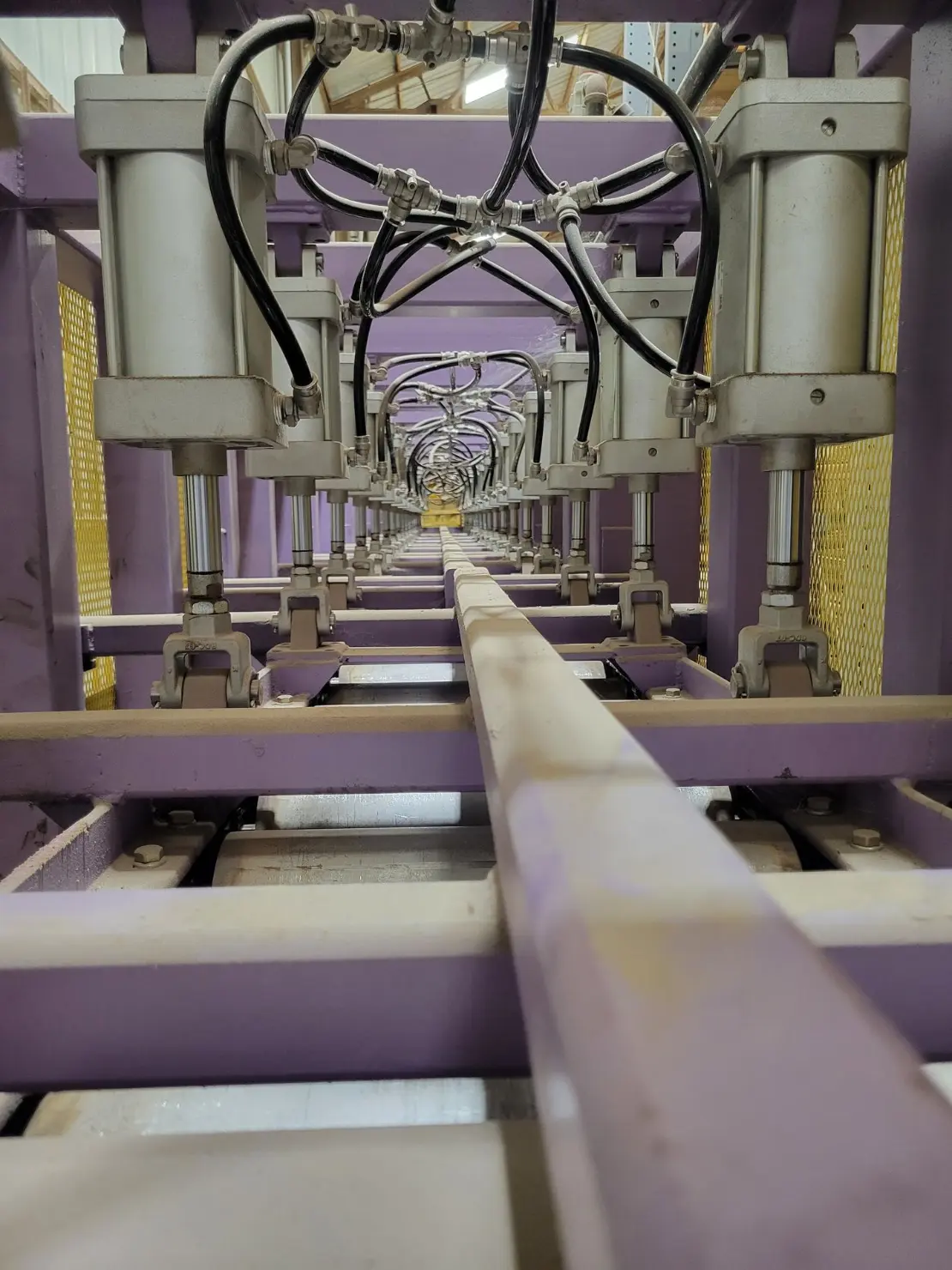
The Two Main Adhesive Systems in Engineered Flooring
PVA Glue: The Cold-Pressed Method
Cold-pressed engineered flooring typically uses PVA glue, a water-based wood flooring adhesive similar to Titebond III Ultimate. It’s classified as D4 water-resistant, meaning it can withstand exposure to moisture but isn’t rated for full exterior or submerged applications.
PVA creates a rigid, high-strength bond line, with a breaking strength of up to 4,000 psi – well above the strength of most woods. However, once cured, it has no flexibility. The bond is strong but brittle, and seasonal wood movement can place stress on the joint over time.
PUR Glue: The Hot-Pressed Method
Hot-pressed engineered flooring uses PUR glue, a polyurethane reactive hot-melt adhesive often regarded as the best adhesive for engineered hardwood. PUR cures in two stages: first forming an immediate hot-melt bond, then a moisture-cured crosslink that creates a permanent, waterproof seal.
PUR can be formulated for different levels of flexibility, allowing the adhesive to absorb subtle wood movement without losing integrity. Once cured, it’s impervious to water and resistant to temperature extremes, making it one of the most reliable engineered flooring glues used in professional manufacturing today.

Why PUR requires investment
Hot-pressed engineered flooring uses PUR glue, a polyurethane reactive hot-melt adhesive often regarded as the best adhesive for engineered hardwood. PUR cures in two stages: first forming an immediate hot-melt bond, then a moisture-cured crosslink that creates a permanent, waterproof seal.
PUR can be formulated for different levels of flexibility, allowing the adhesive to absorb subtle wood movement without losing integrity. Once cured, it’s impervious to water and resistant to temperature extremes, making it one of the most reliable engineered flooring glues used in professional manufacturing today.
Cold-press and hot-press systems differ not only in their chemistry but in the equipment that drives them.
A PUR hot-melt line requires specialized machinery. Basic systems start around $250,000, standard lines approach $700,000, and high-speed industrial lines can reach several million.
By contrast, cold-press systems are significantly more affordable and can even be shop-built, making them practical for small-scale or custom producers. They are particularly suited for oversized panels or bespoke projects that can’t easily run through a continuous press line.
For large-scale manufacturers, however, the precision and consistency of a hot-press system justify the investment – especially when product longevity and performance are priorities.

Real-world conditions
Strength
Both PVA and PUR adhesives typically exceed the strength of the wood itself.
For example, white oak has an across-grain strength of roughly 1,370–1,700 psi, while both adhesive systems can achieve around 2000 - 4,000 psi. In testing, the wood usually fails before the glue.
Flexibility and movement
Where PUR stands apart is in how it handles movement.
Wood naturally expands and contracts with humidity. The top layer and substrate of engineered flooring don’t move at the same rate, so the adhesive must accommodate that stress.
PVA’s rigidity can cause micro-cracks at the glue line over time, especially in environments with seasonal shifts.
PUR’s flexible bond absorbs that stress, maintaining integrity across years of expansion and contraction—an advantage that becomes even more critical with thicker wear layers or wider boards.
Durability and heat resistance
True durability shows in how a floor performs over time and under continual stress.
- PVA glue begins to soften at temperatures above 150°F, and prolonged exposure can reduce its strength by up to 80%. This can become an issue during transport or storage in hot box vans or shipping containers.
- PUR glue, on the other hand, maintains structural integrity up to 250–300°F, making it far more stable under high-heat or fluctuating conditions.
These differences matter. From manufacturing to installation, flooring experiences a range of conditions. A bond that stays stable through it all ensures lasting performance in the real world.

FAQs: Engineered Flooring Adhesives
How do equipment and costs differ?
PUR hot-melt systems require specialized machinery. Entry-level lines start around $250,000, with full industrial systems reaching several million. Cold-press setups are far more affordable and can even be shop-built, making them practical for custom or oversized projects.
Which adhesive delivers the best long-term stability?
Both adhesives are strong, but PUR maintains structural integrity better over time. Its flexibility allows the floor to move naturally with humidity changes, preventing cracks or delamination.
Who uses PUR glue in engineered flooring?
Nearly all major U.S. engineered flooring manufacturers – around 15 to 20 companies – use PUR adhesives sourced from a handful of specialized suppliers. It’s the established industry benchmark.
So, which adhesive is better overall?
Both PVA and PUR form bonds stronger than the wood itself. However, PUR offers a combination of flexibility, water resistance, and heat stability that makes it the preferred choice for long-term performance and professional manufacturing.

Working with WoodCo
At WoodCo, adhesive selection is a deliberate part of design and engineering. Every floor is built to perform with strength, precision, and lasting stability.
Our use of PUR glue technology reflects that standard. Its flexibility and resistance to heat and moisture protect the structure of each plank, keeping every board stable through years of seasonal change and everyday use.
If you’re developing a flooring project, our team can guide you toward the right construction and finish to achieve the performance and look your design demands.